Every crop sits inside a living system. To protect it, we need to understand the insect’s decision to land.
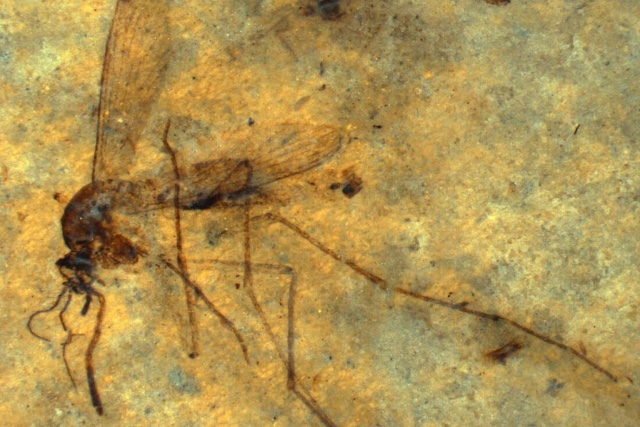
A useful compound must change behavior in the setting where crops need protection. Insect species, crop variety, and local conditions all belong in that question. A result from one controlled assay cannot establish that a formulation will protect a different crop, work through changing weather, or spare beneficial insects. pZero is being developed around that gap: record what an insect does, preserve the conditions that shaped the result, and use the evidence to choose a better next experiment. The aim is crop protection grounded in observed behavior, with uncertainty kept visible as research moves from the laboratory into the field.
Machine intelligence needs to face an insect
Models can learn from tasks with clear, verifiable answers. In mathematics and coding, an automated checker can often score an attempt without requiring a new experiment in the physical world. What is 458x490? A model can generate different attempts and receive a clear score for each one. That feedback provides a simple example of how experience can become a learning signal. Here’s what it looks like in practice:
| How experience becomes learning | |
|---|---|
| Agent | The AI model |
| Environment | The prompt and an automated answer checker |
| State St | The model receives: “What is 458 × 490?” |
| Action At | The model answers 224,400 |
| Next state St+1 | The response is complete and the attempt ends |
| Reward Rt+1 | −1 in this simplified example, because 224,400 does not match 224,420 |
| Learning update | Across many scored attempts, training makes higher-reward solution paths more likely |
Controlled experiments can provide the feedback that a biological prediction needs. Existing research helps frame the question, but a prediction does not verify what an untested compound will do in a particular insect and crop system. A model can read about insect behavior and still need new evidence from a living animal. pZero aims to make that evidence easier to generate, compare, and learn from. Recorded behavior, matched controls, and the full assay context would form the basis for testing whether a model can select more useful experiments.
What if we could change that decision?
It means asking how an insect finds a suitable plant, approaches it, lands, feeds, or chooses a place to lay eggs, and which of those decisions a compound might change.
It means treating an insect’s behavior, its policy, as a sequence of decisions, rather than as a single outcome such as “landed” or “did not land.”
It means making biological answers interpretable. Nutrition, colony history, crop variety, plant condition, lighting, temperature, humidity, and airflow can all change the context of an assay. A useful experiment records those conditions and compares treatment with an appropriate control. Repeated trials help distinguish a consistent effect from a result that depends on an unrecognized difference between runs.
How would we generate verifiable answers, and do so at scale? pZero begins with a proposed question: how does compound X change the behavior of an insect on a defined crop system compared with a matched control? Species, crop, dose, formulation, and environmental conditions need to be recorded before results can be compared. Laboratory findings would then need to be tested under field conditions. Comparing those settings could reveal which laboratory signals help predict useful crop protection and where a model fails. The intended learning loop uses each reviewed result to update predictions and uncertainty, then recommends a next experiment: a compound, dose, formulation, or controlled assay adjustment. That recommendation must earn its value in a prospective test. Reduced landing would be one piece of evidence; crop damage, plant health, and effects on beneficial insects would also need to be measured. The goal is to learn which compounds deserve further investigation while keeping the difference between a promising assay and demonstrated crop protection clear.
Here’s what it looks like:
| How insect behavior becomes model learning | |
|---|---|
| Agent | A crop-seeking insect in a controlled assay |
| Environment | A defined crop surface, compound X, and a matched control |
| State St | The insect encounters plant cues, airflow, light, and compound X |
| Action At | Approach the treated area |
| Next state St+1 | Turn away before landing |
| Experimental reward Rt+1 | +1 in this illustrative example if repeated trials show that X reduced landing by a predefined amount compared with the control |
| Model learning update | Add the verified result to the training data, update the model’s predictions and uncertainty, and recommend the next experiment: the compound, dose, formulation, or controlled assay adjustment to test |
Each experiment should improve the next decision
pZero is being developed to turn insect behavior into training data. Across comparable assay results, models could learn which kinds of compounds are most likely to change an insect’s decision to land on crops. Each experiment would test the distance between what a model predicts and what a living insect actually does.
The opportunity is to connect machine learning with careful experimental science. Useful progress would mean a model that helps researchers choose informative tests, reliable measurements that travel across laboratories, and evidence that holds up when conditions change. Those are research goals to evaluate, not outcomes this preview claims to have achieved.
Our goal is to help researchers find ways to protect crops by changing insect behavior. Success would require evidence of crop protection in practice, alongside evaluation of plant health, beneficial insects, and the wider effects of each formulation.